

Quick answer
To achieve defined, clump-free lashes, start with clean, curled lashes and wipe excess product from the wand. Apply mascara from the base to the tips, wiggling gently. Layer thinly, allowing each coat to dry slightly, and use a lash comb if needed for perfection. Tubing mascaras can also offer excellent separation.
Prep and Product Power for Clump-Free Lashes
Proper preparation and smart product choices are foundational for clump-free mascara application. Beginning with clean, curled lashes and selecting the right mascara formula significantly enhances definition.
Achieving perfectly separated lashes starts before you even open your mascara tube. The right prep steps create an ideal canvas, allowing mascara to glide on smoothly and evenly. Likewise, choosing a mascara that complements your lash type and desired outcome is crucial.
Always begin with clean, dry lashes. Any residual makeup or oil can cause mascara to clump or flake. Using an eyelash curler before applying mascara can lift and separate lashes, making them easier to coat individually. Gently squeeze at the base, then move up to the middle and tips for a soft, natural curl.
Consider incorporating a lash primer. A good primer can create an even surface, add a little extra length or volume, and help keep your lashes separated before mascara is even applied. For mascara itself, ensure your product is fresh. Mascara typically has a shelf life of 3-6 months once opened; older, dried-out formulas are a common culprit for clumping. Tubing mascaras, which encapsulate each lash in a polymer tube, are often excellent choices for a clump-free, defined look and easy removal.
Essential Lash Prep Steps
- Ensure lashes are clean and free of old makeup or oils.
- Gently curl lashes with an eyelash curler, holding for a few seconds at the base, middle, and tips.
- Apply a thin, even coat of lash primer if desired, allowing it to dry slightly.
- Check your mascara's freshness; replace it every 3-6 months.
Mastering the Application Technique
Effective mascara application involves precise wand control and specific techniques to coat lashes evenly without excess product. Wiggling from base to tip and layering thinly are key for separation and definition.
The way you apply mascara is paramount to avoiding clumps and achieving a defined finish. It is not just about getting product on your lashes, but about how that product is distributed. Patience and a steady hand can make a significant difference.
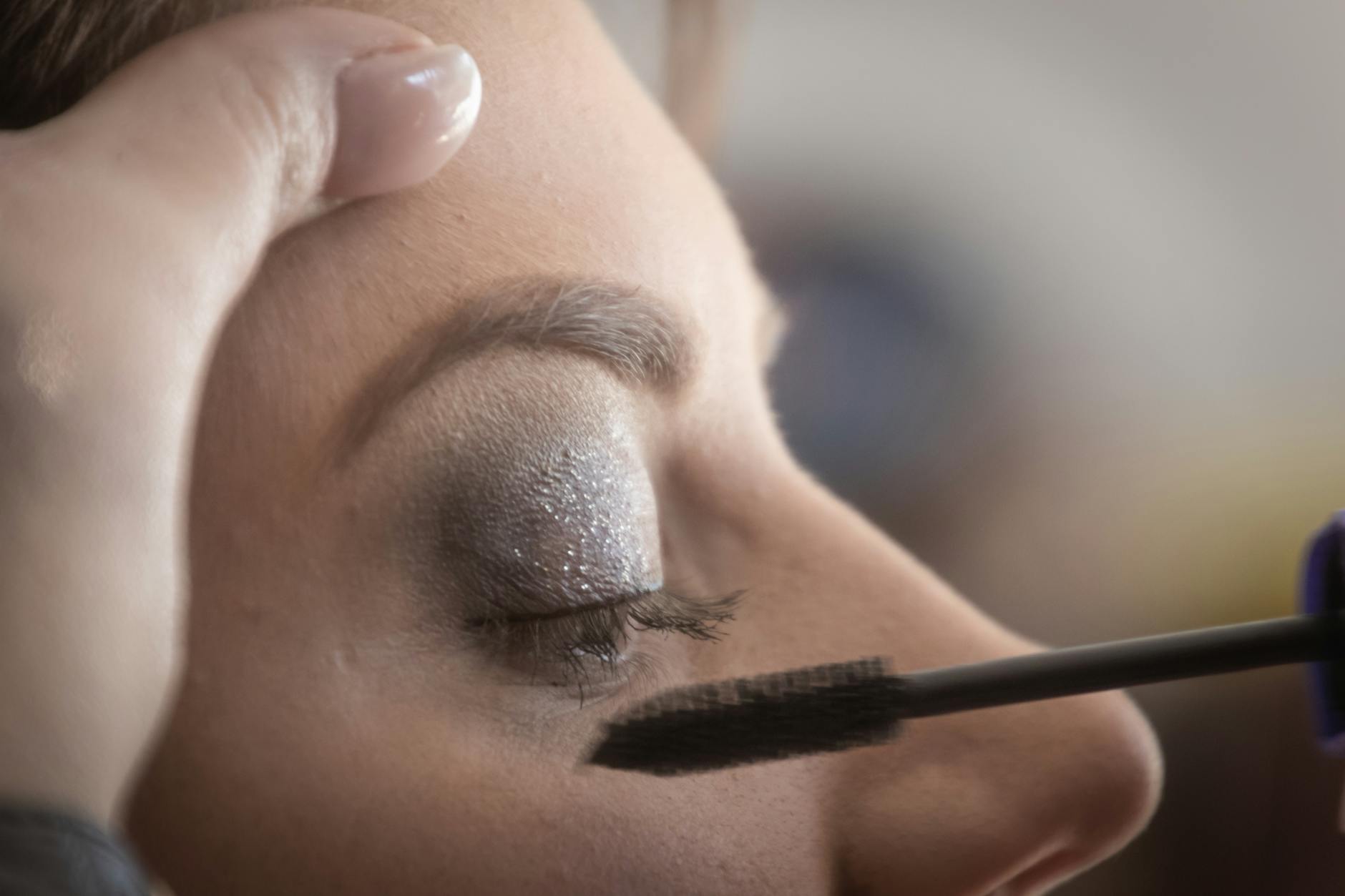
Before application, wipe any excess product from the mascara wand onto the rim of the tube or a tissue. Too much product on the brush is a primary cause of clumps. Start by placing the wand at the very base of your upper lashes. Gently wiggle the wand horizontally as you pull it upwards towards the tips. This wiggling motion helps separate lashes and ensures each one is coated from root to tip.
For lower lashes, hold the wand vertically and use the tip to lightly coat each lash, or apply with a very light hand horizontally. Build layers thinly, allowing each coat to dry for about 10-20 seconds before applying the next. This prevents the previous layer from becoming too wet and combining with the new application into clumps. Two to three thin coats are often more effective than one thick, heavy application for definition without clumping.

Step-by-Step Clump-Free Application
- Remove excess mascara from the wand.
- Place the wand at the base of your upper lashes.
- Wiggle the wand horizontally as you pull it upwards to the tips.
- For lower lashes, use the wand vertically or with a very light horizontal touch.
- Apply thin layers, allowing each coat to dry slightly before adding another.
Troubleshooting and Finishing Touches
Addressing clumps immediately and using tools like a lash comb can refine your application for a polished look. Knowing how to prevent smudging ensures your defined lashes last throughout the day.
Even with the best techniques, a stray clump can sometimes appear. Knowing how to quickly address these minor issues can save your look. A dedicated lash comb is an invaluable tool for perfectly separated lashes.
If you notice clumps forming, immediately take a clean, dry lash comb or a clean spoolie brush and gently comb through your lashes while the mascara is still wet. This helps to separate them and remove any excess product. For stubborn clumps or to ensure maximum separation, run the comb through your lashes a second time after the first coat has slightly dried. Ensure your lash comb is always clean to avoid transferring old product back onto your fresh mascara.
To prevent smudging, especially on lower lashes, consider using a waterproof or tubing mascara. If you make a mistake, wait for the mascara to dry completely before gently flaking it off with a clean cotton swab. Attempting to wipe wet mascara can spread the mess. For persistent irritation or allergies related to mascara or any beauty product, consult with a qualified professional like a dermatologist or ophthalmologist.
Refining Your Mascara Look
- Use a clean lash comb to separate lashes and remove clumps while mascara is still wet.
- Allow mascara to dry completely before attempting to clean up any smudges or mistakes.
- Consider waterproof or tubing formulas to prevent smudging throughout the day.
- Consult a qualified professional for persistent irritation or allergic reactions.
Mascara Wand Types and Their Best Use
| Wand Type | Description | Best For |
|---|---|---|
| Classic (dense bristles) | Often hourglass or straight, with dense, natural or synthetic bristles. | Volumizing, thickening, creating a fuller lash look. |
| Tapered | Thicker at the base, narrowing to a point at the tip. | Reaching inner and outer corner lashes, coating lower lashes, precision. |
| Curved | Designed with a natural curve to fit the lash line. | Lifting, curling, and opening up the eyes. |
| Plastic / Molded | Shorter, more rigid plastic or silicone bristles. | Separating, defining, lengthening, preventing clumps. |
| Ball-tipped | A small, spherical brush at the end of a thinner wand. | Precision coating of individual lashes, targeting tiny or hard-to-reach hairs. |
People also ask
Makeup FAQ
How often should I replace my mascara?
It is generally recommended to replace your mascara every three to six months. This helps prevent bacterial growth, which can lead to eye infections, and ensures the formula remains fresh and effective for smooth application.
Can lash primer really prevent clumps?
Yes, lash primer can significantly help prevent clumps. It creates a smooth, even base for mascara, helps to separate lashes before mascara application, and can improve mascara's adherence and longevity without excessive product buildup.
What is the difference between regular and tubing mascara for clumping?
Regular mascara coats lashes with pigments and waxes, which can sometimes clump if applied too thickly. Tubing mascara forms tiny, water-resistant polymer tubes around each individual lash, making it inherently less prone to clumping and easier to remove without smudging.