Quick answer
The right foundation shade disappears into your skin in natural daylight. Test two or three close shades along the jawline, check the match against your neck and chest, then wait a few minutes to see whether the formula oxidizes darker or warmer.
How do you choose the right foundation shade?
Choose foundation by matching depth first, then undertone. Swatch near the jawline, check the color in daylight, and choose the shade that connects your face, neck, and chest without a visible stripe.
A perfect match on the cheek can still look wrong if the neck is lighter or the chest is warmer. The most wearable match is usually the shade that makes the whole area look connected.
If you are between two shades, choose based on the formula finish. Sheer formulas are more forgiving, while full coverage needs a closer match.
Where should foundation be tested?
Foundation should be tested along the jawline and lower cheek, then checked against the neck and chest. Hand swatches are helpful for texture, but they rarely match facial color accurately.
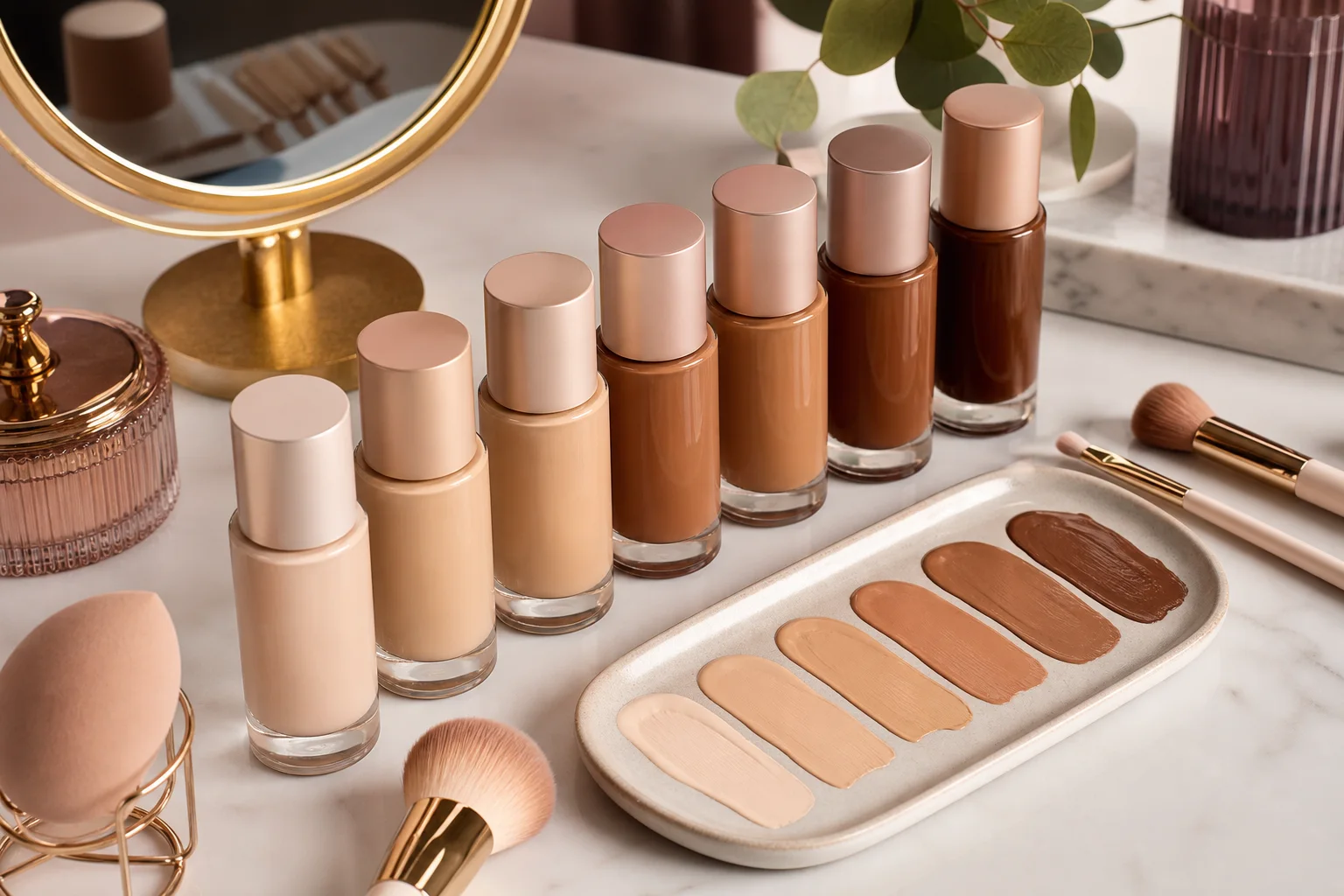
Apply thin stripes of two or three shades, then step into natural light. Indoor bulbs can make shades look warmer, cooler, or more flattering than they really are.
Let the swatches dry down. Some foundations oxidize, which means they can look deeper, warmer, or duller after a few minutes.
Shade test steps
- Swatch three close shades from cheek to jaw.
- Wait five minutes for dry-down.
- Check in daylight near a window.
- Pick the shade with the least visible edge.
- Adjust with powder or bronzer only after the base matches well.
What if foundation looks orange or gray?
Foundation looks orange when it is too warm, too deep, or oxidizing. It looks gray when the undertone is too muted, too cool, or not aligned with your natural undertone.
If every shade looks orange, try neutral or olive options instead of warm labels. If shades look gray, test a warmer or slightly brighter undertone.
A primer, sunscreen, or heavy powder can also shift the final color. Test foundation over the skincare you actually wear.
Foundation undertone clues
| Undertone | Common clue | Shade note |
|---|---|---|
| Cool | Skin reads pink, red, or blue | Look for neutral-cool or rosy shade labels. |
| Warm | Skin reads golden, peach, or yellow | Look for warm, golden, or olive-friendly shades. |
| Neutral | Skin is balanced between pink and golden | Start with neutral shades and adjust by depth. |
| Olive | Skin can look green, muted, or gray in some bases | Try olive, golden-neutral, or muted undertones. |
People also ask
Makeup FAQ
Should foundation match my face or neck?
It should connect the face, neck, and chest. The jawline is a good testing zone because it shows whether the shade blends into both areas.
Why does foundation oxidize?
Foundation can oxidize because of formula chemistry, skin oils, sunscreen, primer, or time. Let a swatch dry before deciding on the shade.
Can I mix two foundation shades?
Yes. Mixing two close shades can help through seasonal color changes. Keep the undertone similar so the final mix does not turn muddy.