Quick answer
Apply foundation by preparing your skin first, choosing the right tool for your preferred finish, and blending from the center of the face outward. Use thin layers instead of heavy coverage, check the finish in natural light, and adjust your technique based on your skin needs and makeup style.
How do you prepare your skin before applying foundation?
Start with a clean, comfortable base before reaching for foundation. Proper preparation helps makeup apply more evenly and makes it easier to blend.
Foundation usually looks smoother when it is applied over skin that has been gently cleansed and moisturized. The goal is not to create a perfect surface, but to make sure the skin feels comfortable and ready for makeup. If your skin reacts often to products or you experience ongoing irritation, allergies, or unusual changes, consider asking a qualified skincare professional for guidance.
Give your skincare products time to absorb before applying foundation. A simple routine can include the products you already know work well for your skin, followed by a foundation shade and formula that match your preferred finish.
Preparation steps
- Cleanse the skin and remove leftover makeup or buildup
- Apply suitable skincare products and allow them to settle
- Choose foundation based on your desired coverage and finish
What is the best way to apply and blend foundation?
The most effective approach is to begin with a small amount and blend gradually. Building coverage slowly gives more control over the final look.
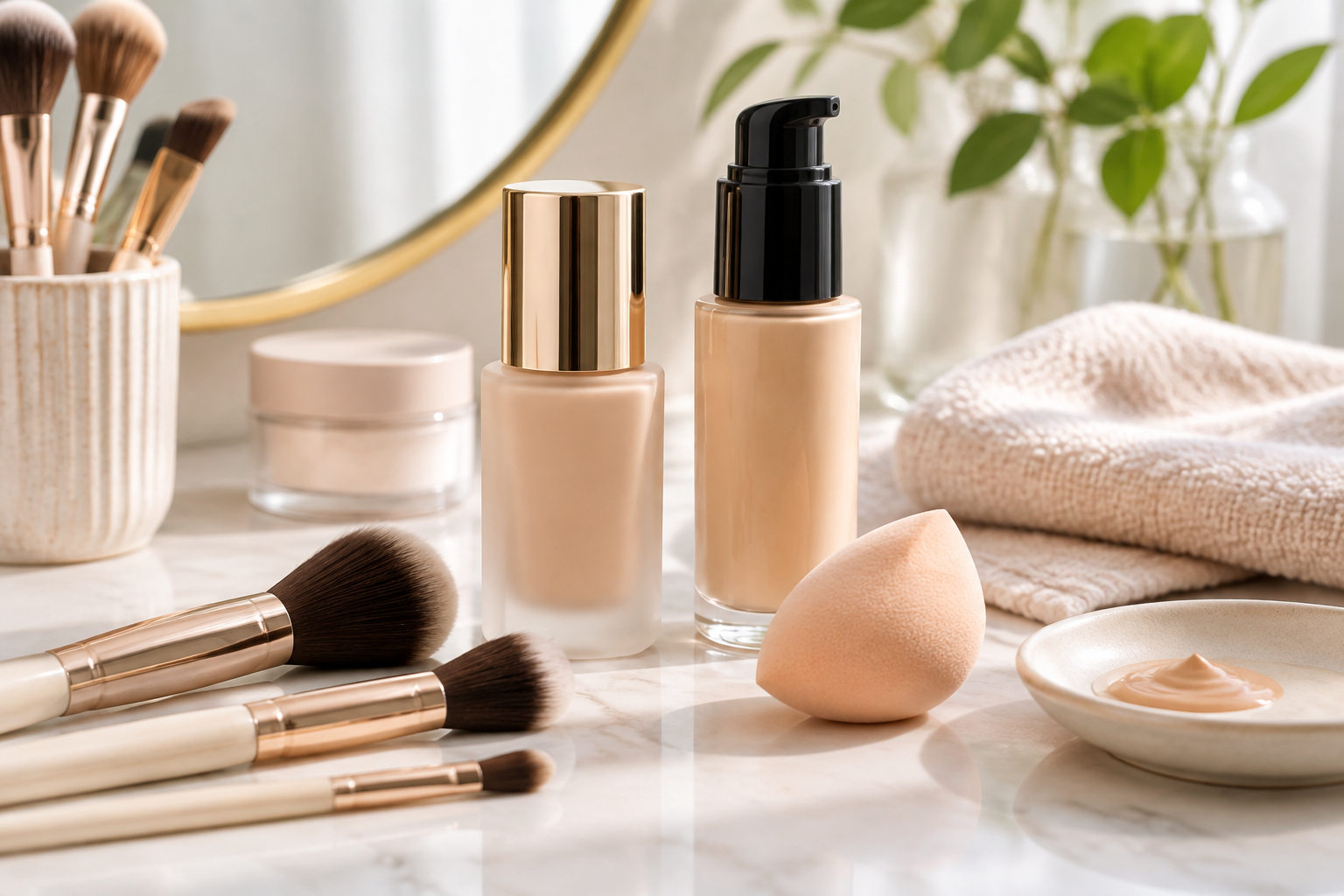
Apply foundation in small dots or a thin layer, starting around the center of the face where many people want more coverage. Blend outward toward the hairline and jawline using gentle motions. A damp sponge can create a softer finish, while a brush can help spread product evenly and create a more polished appearance.
Pay attention to areas where foundation can collect, such as around the nose or facial lines. Taking extra time to blend these areas helps the base look more natural. The right method depends on your preferences, your tools, and how you like your makeup to look throughout the day.
Blending tips
- Use light pressure instead of rubbing the product into the skin
- Work in thin layers and add more only where needed
- Check your foundation in natural lighting when possible
How can you choose a foundation method for different skin needs?
Different application methods can change the finish of foundation. Choosing the right approach depends on whether you prefer a sheer, natural, or fuller base.
People with different skin preferences may enjoy different foundation techniques. Someone who likes a fresh look may prefer a lighter application with fingers or a sponge, while someone seeking more precise coverage may prefer a brush. There is no single method that works for everyone, so experimenting with small changes can help you find what feels comfortable.
Focus on how the foundation looks and feels rather than trying to follow one strict rule. If a product causes persistent discomfort, irritation, or skin concerns, seek advice from a qualified professional who can help you understand your options.
Common application choices
- Fingers for a quick, natural application with lightweight formulas
- A makeup sponge for a soft blended finish
- A brush for controlled coverage and detailed blending
Foundation application basics by step
| Step | What to do | Why it matters |
|---|---|---|
| Prepare skin | Cleanse, moisturize, and allow skincare to settle before makeup | Creates a smoother surface and helps foundation sit more evenly |
| Choose a tool | Use a brush, sponge, or fingers depending on the coverage and finish you want | Different tools can change the texture and appearance of the base |
| Blend carefully | Apply small amounts and blend from the center of the face outward | Helps avoid visible edges and keeps the finish natural |
| Build coverage | Add another thin layer only where more coverage is needed | Keeps the makeup looking balanced instead of heavy |
People also ask
Makeup FAQ
Should I apply foundation with a brush or sponge?
Both tools can work well. A sponge often creates a softer finish, while a brush can provide more control over coverage and blending.
How do I stop foundation from looking heavy?
Start with a small amount, blend carefully, and build coverage only in areas where you need more product.
Why does my foundation look uneven?
Uneven foundation can happen when the skin is not prepared, too much product is applied, or the foundation is not blended fully.